

At The Edu Experience, our holistic primary English programme is designed to develop strong language foundations and confident communication skills. Through structured lessons, regular language exposure, and expert guidance, we help students express ideas clearly, use grammar and vocabulary accurately, and approach English with confidence–supported by our unlimited tuition model that allows learning to progress at the right pace.
What is Unlimited Tuition?
Unlike typical tuition centres, TEE students can attend up to four classes a week at no extra cost, allowing for regular practice, immediate clarification of doubts, and repeated exposure to key concepts. Unlimited tuition at TEE gives students the flexibility to learn without being restricted by once-a-week lessons. This consistent support helps learning deepen over time, builds confidence, and ensures students progress at a pace that truly suits their needs.
Why Unlimited Tuition?
Children learn best through repetition, practice, and the freedom to try again. Unlimited tuition supports learning in the same way. Just like learning to ride a bike or feed themselves, children do not master new skills immediately; they wobble, make mistakes, and improve with each attempt.
TEE’s unlimited English programme is designed around the understanding that language is best learnt through immersion and frequent use. The more a child is exposed to English through reading, writing, speaking, and listening, the more naturally and quickly they will pick it up.
How Does Unlimited English Tuition Benefit Students?
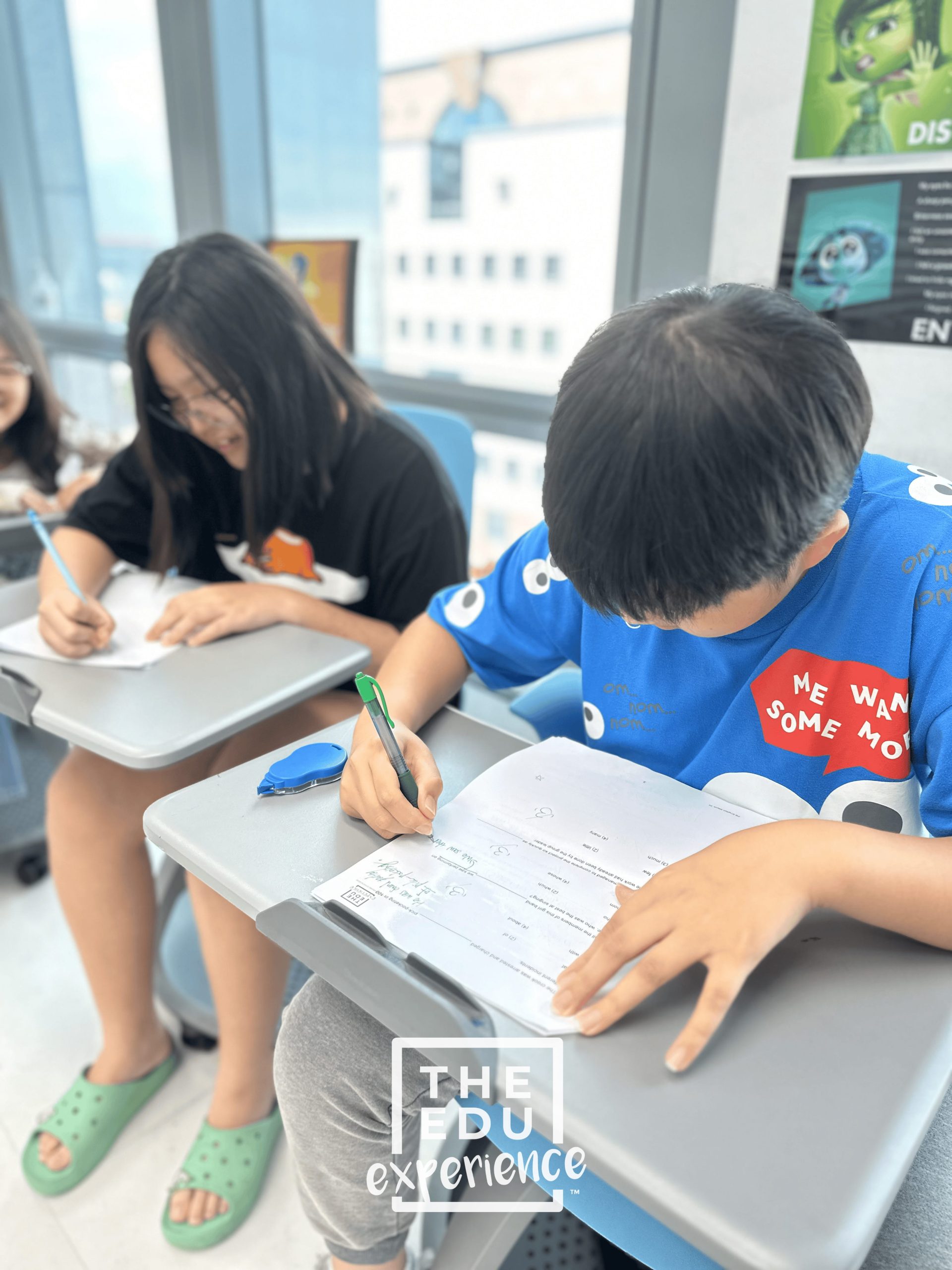
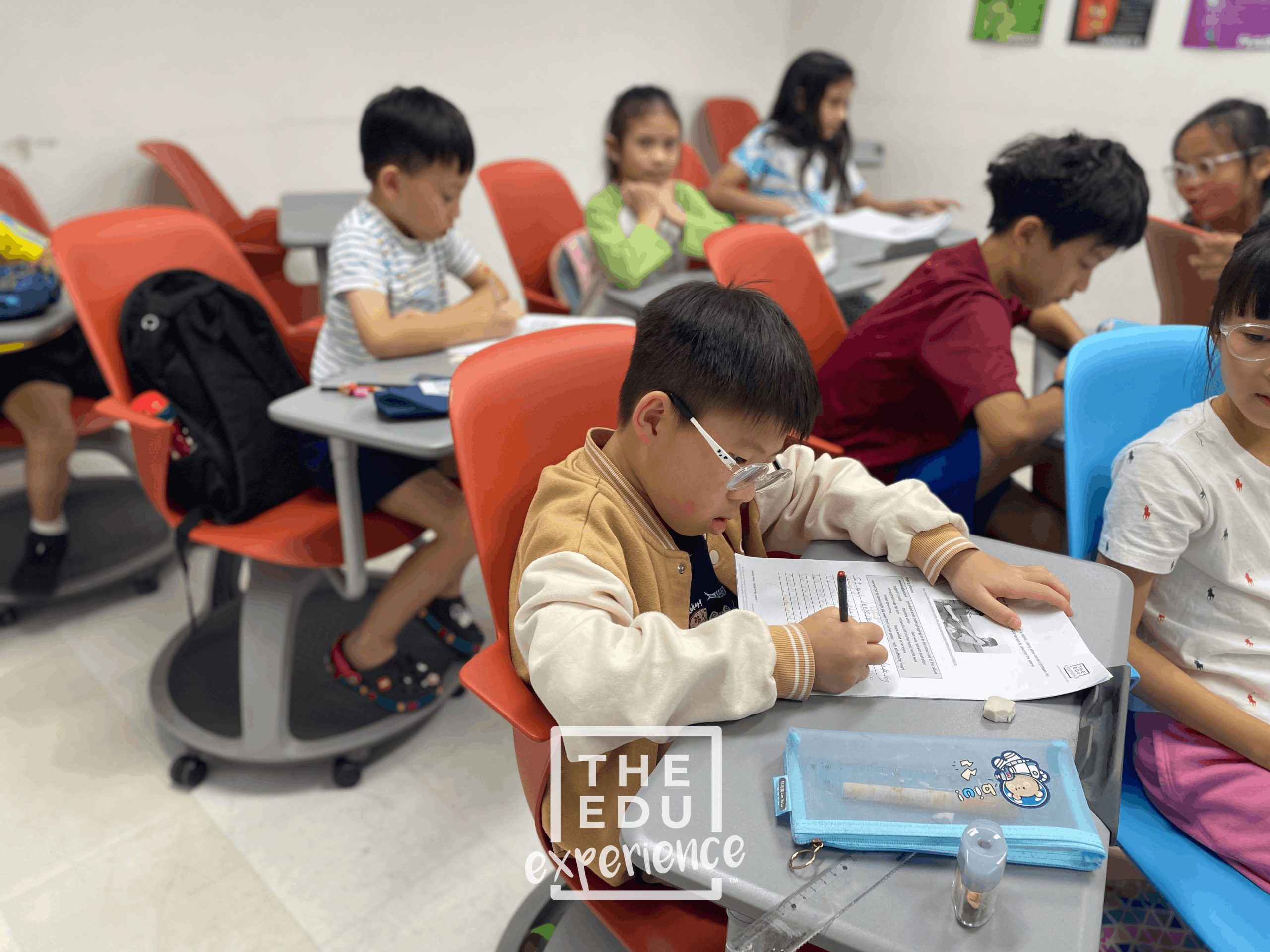
With unlimited access to lessons, students engage with English regularly, practise expressing their ideas, and receive timely feedback that helps them refine their language skills in real time. This consistent exposure builds fluency, strengthens confidence, and allows English to become a language they use comfortably, not just a subject they study.
How Does It Work?
STEP 01
Reserve a Fixed Weekly Class
Reserve 1 fixed, weekly Primary English tuition class.
STEP 02
Book Extra Classes
Struggling with a specific grammar rule or finding it challenging to read expressively and fluently?
Book up to three extra tuition classes during the week to sharpen language skills at no extra cost.
STEP 03
Get Extra Support
Need extra support?
Book a consultation slot* (English consultations are conducted on Thursdays), and receive 1-on-1 guidance with a dedicated English teacher.
We know that life is busy. That’s why we built our own app that allows you to manage bookings easily.
*Consultations are only available at our Tampines location.
Core English Lessons
English lessons at TEE cover all examinable components and aim to equip students with the skills necessary to tackle and ace examinations. Our lessons cover and reinforce these four essential pillars:
1. Grammar Mastery
Grammar is the foundation of English–it establishes rules that organise words into meaningful sentences, allowing clear and effective communication. Students learn and revise both basic and advanced grammar rules to ensure they are examination-ready. TEE’s grammar exercises centre around:
Exposure to Essential Concepts: We cover challenging topics and rules such as Subject-Verb Agreement, Subjunctive Mood, Reported Speech, and Tenses.
Regular Revision: We revisit each rule regularly, and students undergo intensive weekly practices, becoming well-versed in grammar in no time.
2. Vocabulary & Global Awareness
A rich vocabulary is the key to expression. TEE’s vocabulary exercises centre around:
Vocabulary Expansion: Students expand their vocabulary banks through rigorous exercises such as cloze passages and themed vocabulary exercises.
Exposure to Current Affairs: We expose students to current events and essential news. This ensures they are apprised of the happenings around them and grow to become well-informed, confident learners—a crucial skill for the Oral component.
3. Critical Comprehension
We teach students how to deconstruct a text. TEE’s comprehension exercises centre around:
Technique Utilisation: Students pick up key skills such as inferencing and how to identify and use contextual clues to derive answers.
Literary Analysis: Significant points and tricky words in each story are highlighted and explained. Students learn about the various literary devices present in each passage to deepen their understanding.
4. Oral & Communication
Important Update: MOE announced new changes to the 2025 PSLE English syllabus, shifting the distribution of marks. Oral communication now takes up 20% of a child’s final score (up from 15%).
This change underscores the importance of strong verbal expression. Students will be assessed not only on their articulation but also on their ability to engage in thoughtful discussions. TEE is committed to this shift through our oral-focused lessons that cover:
Reading Aloud: Students learn how to pronounce tricky words, vary intonation, and read expressively and fluently.
Stimulus-Based Conversation: Students learn how to present opinions clearly and engage in meaningful conversations confidently and coherently.
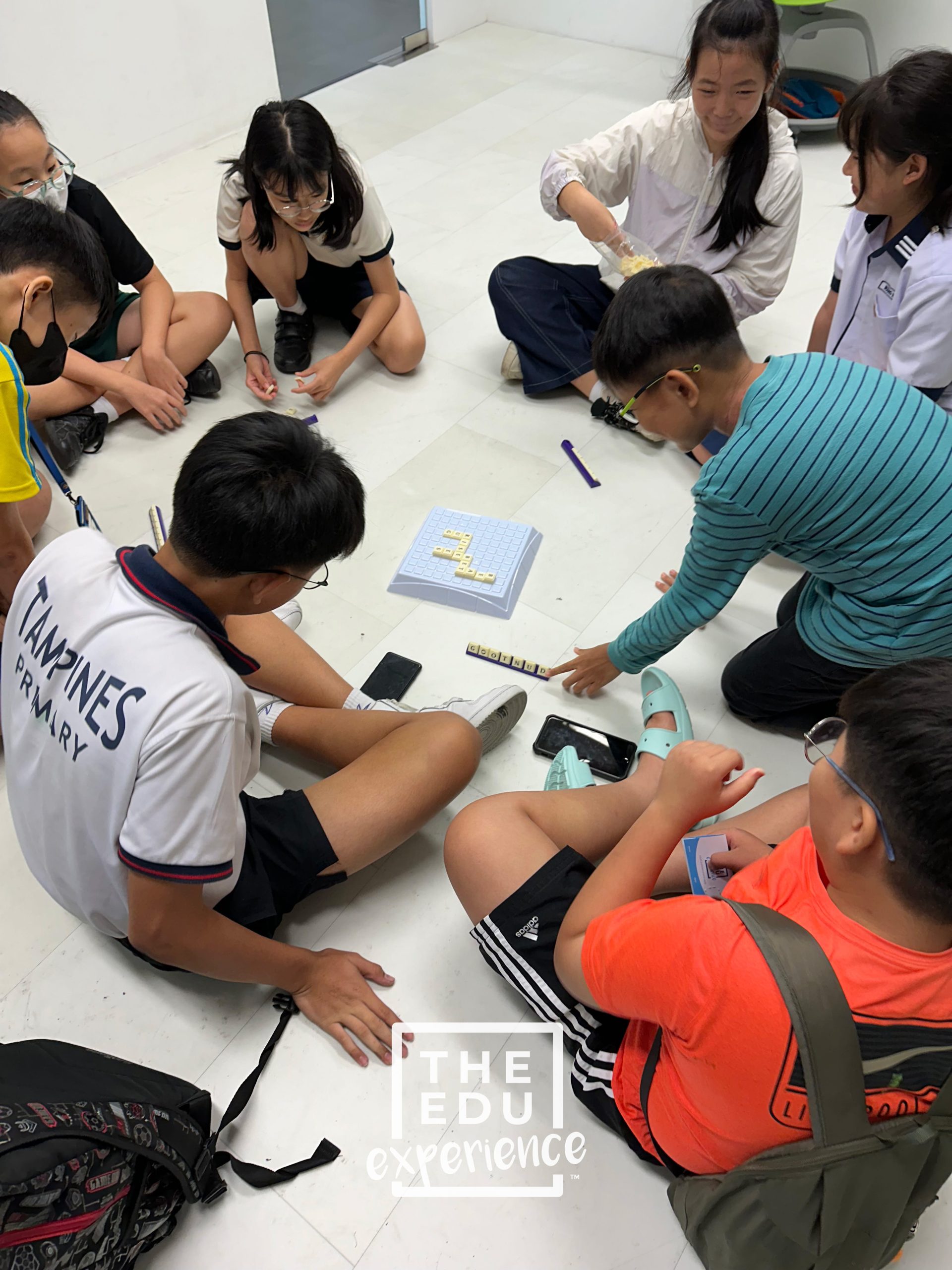
Activity-Based Learning: Students build confidence through fun and engaging activities such as Show-and-Tell (for P1-P3) and Debate (for P4-P6).
Creative Writing Lessons
Our dedicated writing curriculum is designed to build a strong foundation through a structured, year-long plan.
The “Immediate Feedback” Philosophy (Our Unique Advantage)
Our teaching philosophy revolves around providing close guidance and immediate feedback.
The Problem: Learning is most effective when the feedback loop is immediate. However, other centres often only return marked scripts after a week. By the time a student receives their marked work, the cognitive context–the specific thought process and reasoning they used while writing–has often faded, making their corrections feel disconnected from their current efforts.
The TEE Solution: We believe in addressing errors as they occur. Mistakes made are corrected on the spot, and students go home with fully-written and fully-marked compositions. This real-time correction process helps students understand and rectify their mistakes instantly, leading to better retention.
The 5 Core Writing Themes
Throughout the year, students will explore 5 core writing themes to ensure comprehensive storytelling mastery:
1
Mastering Story Structure
Mastering Story Structure
2
Elevating Emotional Elements
Elevating Emotional Elements
3
Creating Immersive Stories
Creating Immersive Stories
4
Enhancing Narrative Impact
Enhancing Narrative Impact
5
Crafting Dynamic Narratives
Crafting Dynamic Narratives
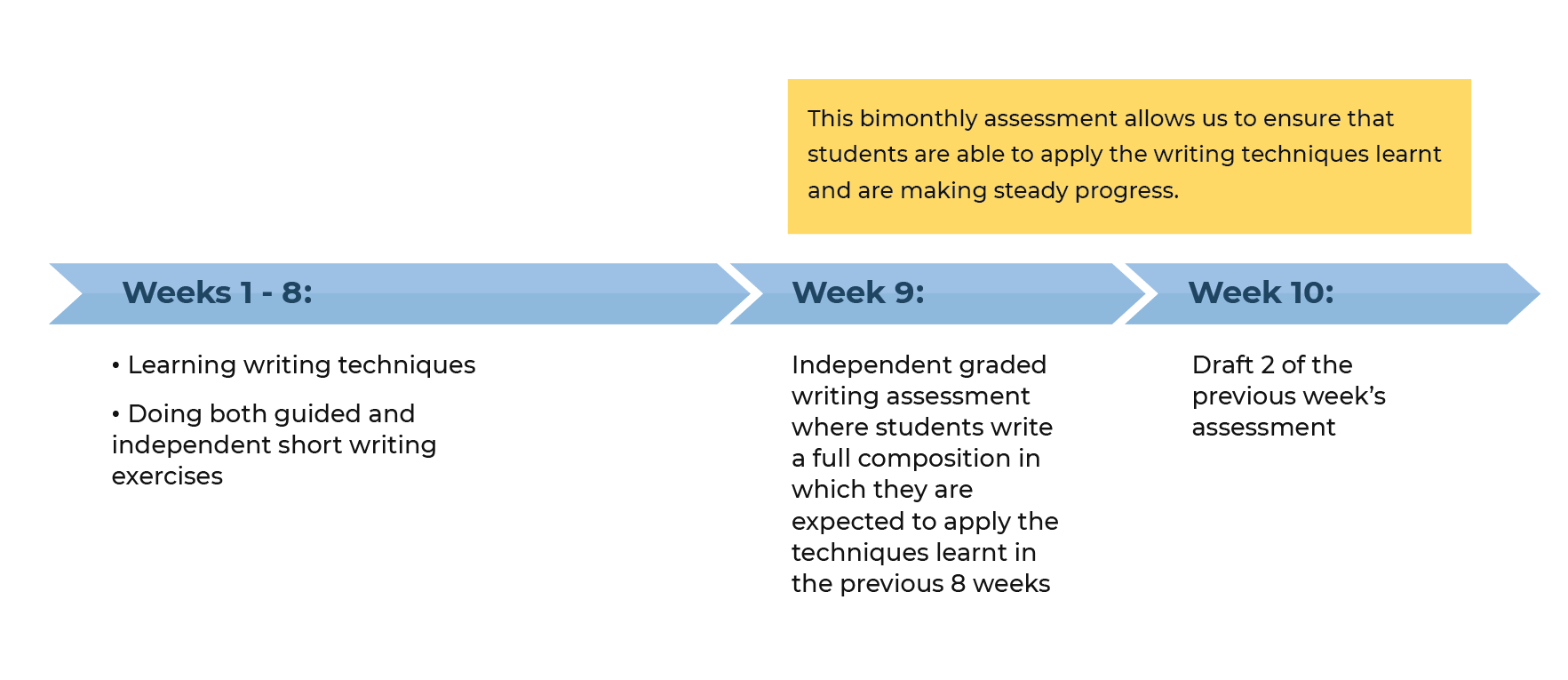
At the end of each core theme, students sit for a writing assessment based on a PSLE-style topic. This allows us to effectively track their progress and provide individualised feedback.
Effective Writing Techniques
Students learn how to write well-structured and engaging stories utilising techniques such as foreshadowing, characterisation, show-not-tell, and varying sentence structure.
[Comparison Example]
Before Utilising Techniques:
Marcus felt very angry. “You are not my best friend anymore!” he shouted. He could not believe that James had betrayed him.
After Utilising TEE Techniques:
Marcus’s face flushed crimson, his hands balling into tight fists. “You are dead to me!” he bellowed, his voice cracking with raw emotion. The sting of James’s betrayal felt like a physical blow.
Lower vs. Upper Primary Approach
Lower Primary: Students focus on improving their writing stamina. Children attempt exercises that gradually increase in difficulty, from filling in the blanks to writing their own stories. We use fun writing topics and engaging activities like writing excursions to instil a love for the language.
Middle & Upper Primary: Students apply learnt techniques to their own compositions with close guidance. They are exposed to various themes and topics to prepare for examinations.
Creative Writing Lesson Structure
A Roadmap for English Mastery (P1 – P6)

Primary 1 English
Laying the Groundwork
Building a strong foundation is key to academic success. We aim to not only instil a love of learning in our students but also equip them with the skills needed to tackle primary-level learning with confidence.

Primary 2 English
Developing Building Blocks
Building upon the foundation laid in Primary 1, students learn more advanced concepts and work on the application of those concepts in sentence construction and basic comprehension.

Primary 3 English
Navigating Linguistic Challenges
A pivotal year. With the introduction of Creative Writing lessons, students pick up key writing techniques and expand their vocabulary banks while still honing their grammar skills.

Primary 4 English
Strengthening Language Skills
Students refine key skills in a supportive environment as they manage the rigors of the upper primary years. We introduce more complex themes for composition and debate.
Primary 5 English
Advancing Language Proficiency
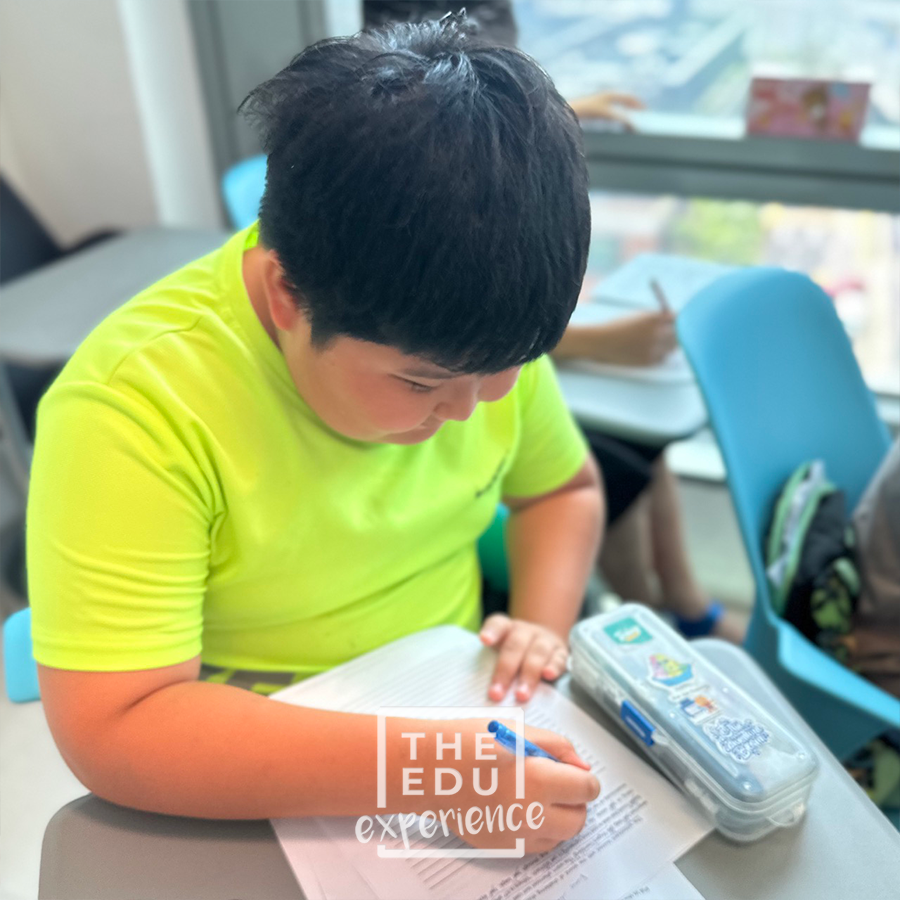
Sharpening their skills and bridging learning gaps, our students gain a head start on PSLE preparations so they may enter the following year with renewed focus and confidence.

Primary 6 English
Paving the Way for PSLE Success
The final lap. Students revise their content knowledge and sit for regular mock examinations to identify and bridge learning gaps. Close guidance and support are given to each student to ensure they are primed for PSLE success.
Primary 1 English
Laying the Groundwork
Building a strong foundation is key to academic success. We aim to not only instil a love of learning in our students but also equip them with the skills needed to tackle primary-level learning with confidence.
Primary 2 English
Developing Building Blocks
Building upon the foundation laid in Primary 1, students learn more advanced concepts and work on the application of those concepts in sentence construction and basic comprehension.
Primary 3 English
Navigating Linguistic Challenges
A pivotal year. With the introduction of Creative Writing lessons, students pick up key writing techniques and expand their vocabulary banks while still honing their grammar skills.
Primary 4 English
Strengthening Language Skills
Students refine key skills in a supportive environment as they manage the rigors of the upper primary years. We introduce more complex themes for composition and debate.
Primary 5 English
Advancing Language Proficiency
Sharpening their skills and bridging learning gaps, our students gain a head start on PSLE preparations so they may enter the following year with renewed focus and confidence.
Primary 6 English
Paving the Way for PSLE Success
The final lap. Students revise their content knowledge and sit for regular mock examinations to identify and bridge learning gaps. Close guidance and support are given to each student to ensure they are primed for PSLE success.
Common English Hurdles Students May Face
Pronunciation difficulties
Grammar complexity
Limited vocabulary
Inaccurate sentence structures
Superficial writing
Why Parents Choose TEE for English
1. Our Real-Time Marking Philosophy
We believe that immediate feedback helps students learn more effectively, and all our English educators have been trained to mark scripts on the spot. When corrections and suggestions are given right away, students can clearly understand their mistakes, make improvements while the ideas are still fresh, and avoid repeating the same errors. This timely guidance reinforces good writing habits, strengthens language accuracy, and helps students retain what they have learnt with greater confidence.
2. Future-Ready Oral Training
We don’t just teach English; we teach communication. By integrating confidence-building activities such as debate and speech and drama, we prime students for examination success.
3. Holistic Curriculum
English lessons at TEE consist of Core and Creative Writing classes. Our curriculum has been carefully designed to cover every component of the language, including grammar, vocabulary, writing, comprehension, and oral communication, ensuring no skill is left undeveloped. Students learn how to think, speak, and write effectively across all contexts, giving them the confidence and versatility to excel in school and beyond.
Locate Our Centres
Tampines Centre
3 Tampines Central 1 #07-02, #1 Tampines Plaza, Singapore 529540
Bukit Timah Centre
9 King Albert Prk, #02-25/26 KAP Mall, Singapore 598332
Ang Mo Kio Centre
6 Ang Mo Kio Street 53, #03-01 Cheng San Community Club, Singapore 569205