At The Edu Experience, our primary Chinese programme is taught by native speakers and designed to build strong linguistic foundations and confident language use. Through systematic instruction, repeated practice, and expert guidance, we help students strengthen vocabulary, sentence structure, and oral expression, and approach Chinese with confidence–supported by our unlimited tuition model that allows learning to progress at the right pace.
What is Unlimited Tuition?
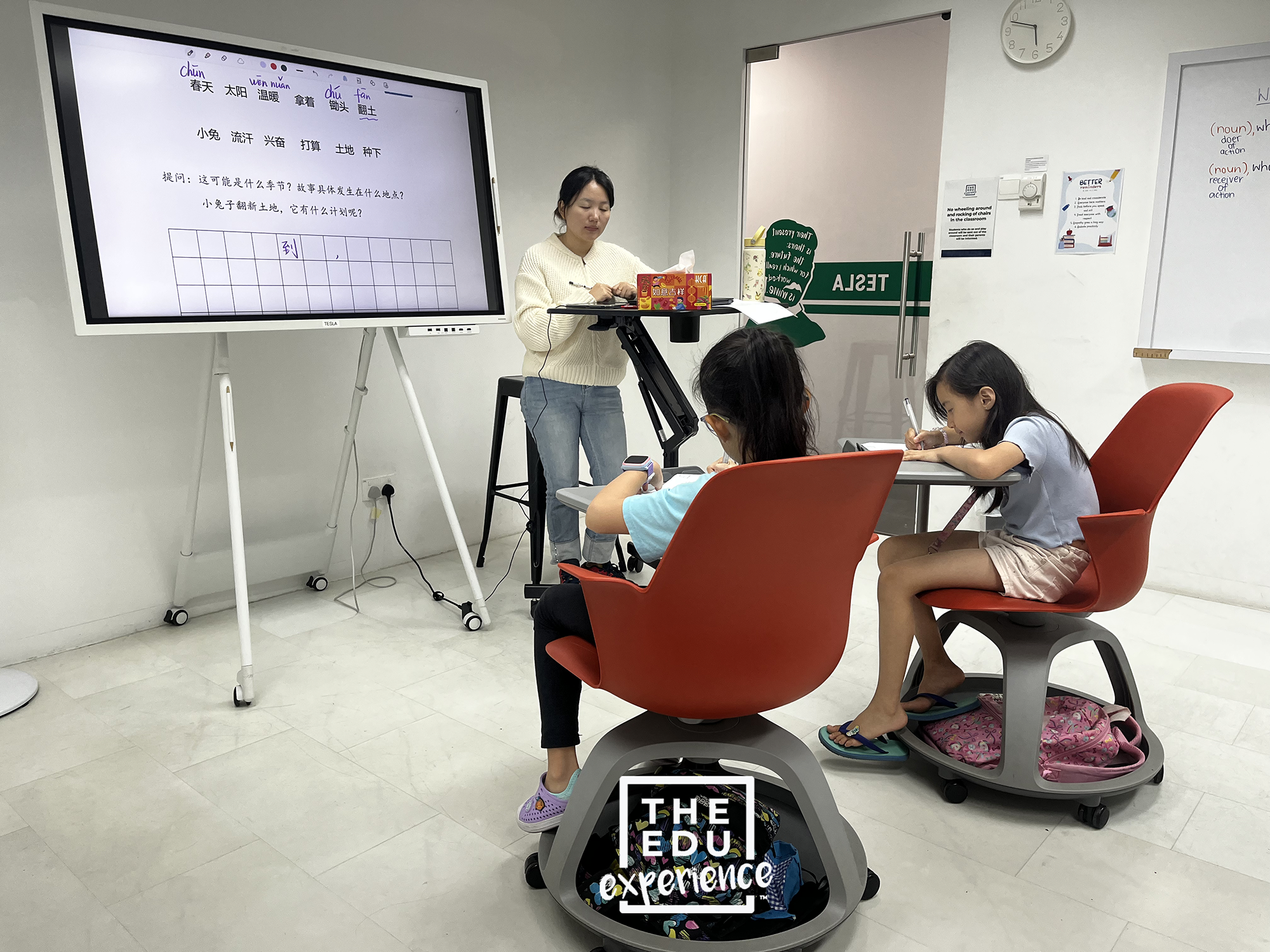
Unlike typical tuition centres, TEE students can attend up to four classes a week at no extra cost, allowing for regular practice, immediate clarification of doubts, and repeated exposure to key concepts. Unlimited tuition at TEE gives students the flexibility to learn without being restricted by once-a-week lessons. This consistent support helps learning deepen over time, builds confidence, and ensures students progress at a pace that truly suits their needs.
Why Unlimited Tuition?
Children learn best through repetition, practice, and the freedom to try again. Unlimited tuition supports learning in the same way. Just like learning to ride a bike or feed themselves, children do not master new skills immediately; they wobble, make mistakes, and improve with each attempt.
Learning Chinese requires sustained exposure and frequent use of the language. Unlimited tuition gives students more opportunities to practise vocabulary, sentence structures, reading, and oral communication. Through repeated practice and guided correction, students gradually build fluency, improve accuracy, and gain confidence in using Chinese both in writing and in speech.
How Does Unlimited Chinese Tuition Benefit Students?
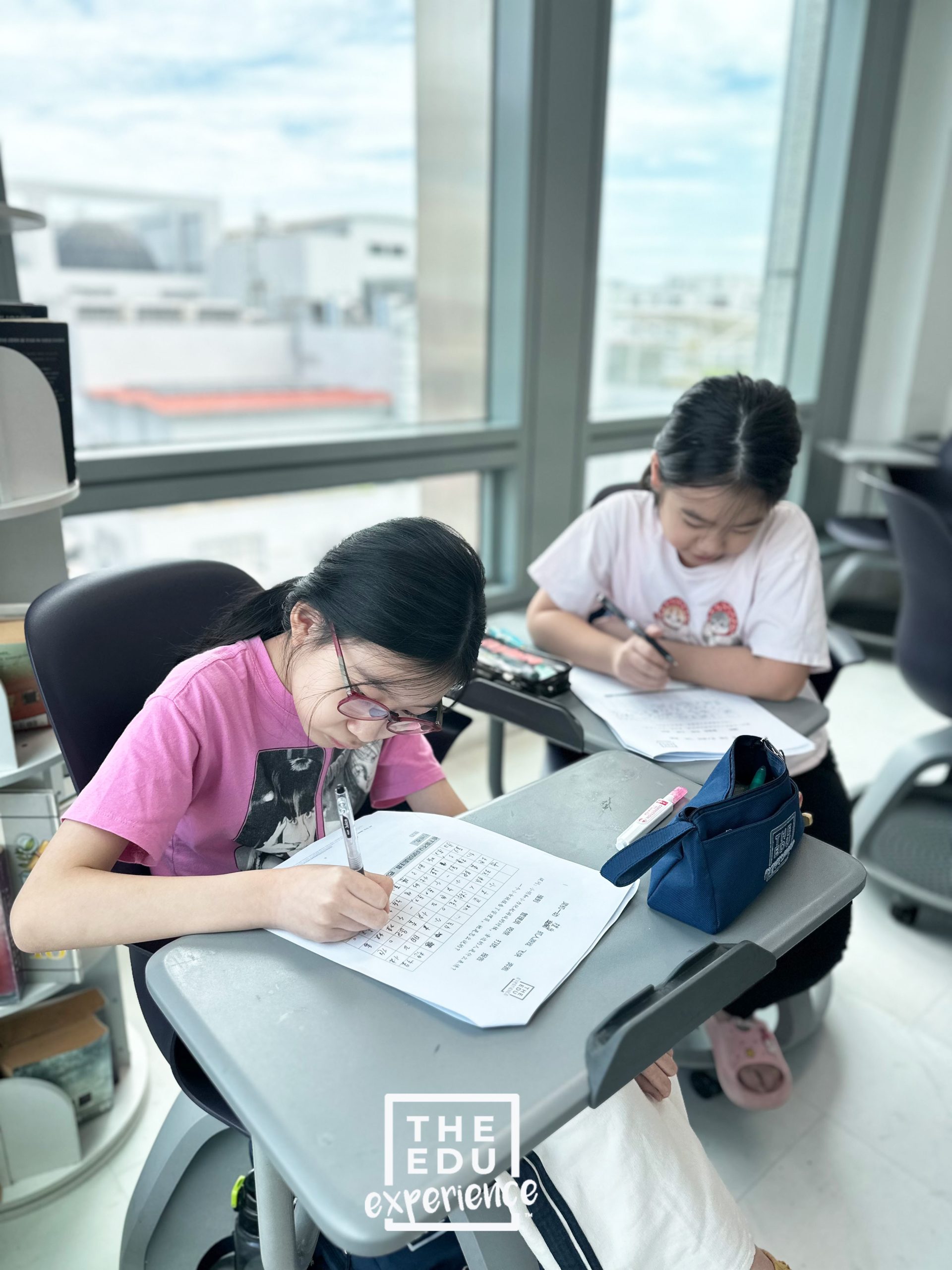
At TEE, our unlimited Chinese programme gives students the time and practice they need to strengthen vocabulary, sentence structure, and composition skills. Through repeated oral practice, guided writing, and targeted revision, students gradually build fluency and confidence, ensuring that understanding deepens and progress becomes steady and lasting.
How Does It Work?
STEP 01
Reserve a Fixed Weekly Class
Reserve 1 fixed, weekly Primary Chinese tuition class.
STEP 02
Book Extra Classes
Struggling with pinyin or character-writing accuracy?
Book up to three extra tuition classes during the week to refine language skills at no extra cost.
STEP 03
Get Extra Support
Need extra support?
Book a consultation slot* (conducted on Tuesdays), and receive 1-on-1 guidance with a dedicated Chinese teacher.
We know that life is busy. That’s why we built our own app that allows you to manage bookings easily.
TEE’s Core Chinese Language Programme
Our programme is designed for reading, writing, listening, and oral mastery. It centres around:
1. Grammar (语法)
We move beyond rote memorisation. Students learn the logic behind the language, mastering subject-verb-object structures, prepositions, and particles. This ensures they construct grammatically accurate sentences in both oral and written exams.
2. Comprehension (阅读理解)
We teach practical strategies for tackling the toughest comprehension passages. Students learn to connect associated words to context, accurately identify answers, and most importantly, phrase their answers to hit every marking point.
1. Grammar (语法)
We move beyond rote memorisation. Students learn the logic behind the language, mastering subject-verb-object structures, prepositions, and particles. This ensures they construct grammatically accurate sentences in both oral and written exams.
2. Comprehension (阅读理解)
We teach practical strategies for tackling the toughest comprehension passages. Students learn to connect associated words to context, accurately identify answers, and most importantly, phrase their answers to hit every marking point.
3. Vocabulary (词汇)
Using concrete teaching aids and digital resources, we help students master collocations and semantic radicals. This empowers them to:
- Identify characters effectively
- Differentiate between tricky homophones
- Decipher meanings independently
4. Oral and Communication Skills (口语与沟通能力)
Oral exams require more than just reading aloud. We train students to:
- Read expressively and fluently
- Verbalise their thoughts coherently
- Express their opinions on current events logically, a key requirement for the PSLE Oral component
3. Vocabulary (词汇)
Using concrete teaching aids and digital resources, we help students master collocations and semantic radicals.
This empowers them to:
- Identify characters effectively
- Differentiate between tricky homophones
- Decipher meanings independently
4. Oral and Communication Skills (口语与沟通能力)
Oral exams require more than just reading aloud.
We train students to:
- Read expressively and fluently
- Verbalise their thoughts coherently
- Express their opinions on current events logically, a key requirement for the PSLE Oral component
5. Thematic Writing (主题写作)
Our intensive writing programme transforms students from passive learners into creative storytellers. We focus on literary techniques like similes, personification, metaphors, and hyperboles, teaching students the “Show-Not-Tell” method to describe scenes using all five senses.
A. Topic-Based Compositions (命题作文)
For Upper Primary & PSLE Mastery
We use a 3-step framework to ensure students never go off-topic:
1. Analysis: Students learn the 3 steps required to decode questions accurately—grasping keywords, spotting implicit information, and defining the scope (time/space/person) to ensure relevance.
2. Content Formulation: Inspiration comes from observation. Students learn how to extract details from their daily lives and personal experiences to make their stories more authentic.
3. Reflection: Good writers narrate; great writers reflect. We train students to end their compositions by sharing values and life lessons, adding depth that examiners love.
B. Picture Descriptions (看图作文)
Our 5-Step “Look-Think-Speak-Write-Evaluate” Method
Step 1: Look (Observation): Analyse the picture in a specific order (Setting -> People -> Action) to grasp the full story.
Step 2: Think (Imagination): Spark creativity by imagining what characters are thinking or saying.
Step 3: Speak (Articulation): Describe the story verbally from “whole” to “part” before writing a single word.
Step 4: Write (Structure): Ensure correct wording, coherent sentence structures, and accurate punctuation under close guidance.
Step 5: Evaluate (Insight): Summarise insights and deepening emotional understanding through class discussions.
Tailored Approaches for Every Stage

Lower & Middle Primary (P3 & P4 Chinese)
Focus: Character Recognition & Proper Penmanship
Students work on ensuring they pronounce characters accurately, use proper stroke order, and have neat handwriting. They use new vocabulary to understand sentence structures thoroughly and also learn to expand sentences by adding appropriate adverbials for richer expression.

Upper Primary (P5 & P6 Chinese)
Focus: Character Analysis & Effective Application (PSLE Prep)
We deep-dive into polyphonic characters, visually similar characters, and homophones to help students prevent commonly-made examination mistakes. Students master the format and content requirements of various writing genres and hone their ability to apply newly-learnt words effectively in high-pressure exam scenarios.
Lower & Middle Primary (P3 & P4 Chinese)
Focus: Character Recognition & Proper Penmanship
Students work on ensuring they pronounce characters accurately, use proper stroke order, and have neat handwriting. They use new vocabulary to understand sentence structures thoroughly and also learn to expand sentences by adding appropriate adverbials for richer expression.
Upper Primary (P5 & P6 Chinese)
Focus: Character Analysis & Effective Application (PSLE Prep)
We deep-dive into polyphonic characters, visually similar characters, and homophones to help students prevent commonly-made examination mistakes. Students master the format and content requirements of various writing genres and hone their ability to apply newly-learnt words effectively in high-pressure exam scenarios.
Data-Driven Results: Chinese Mock Exam Papers
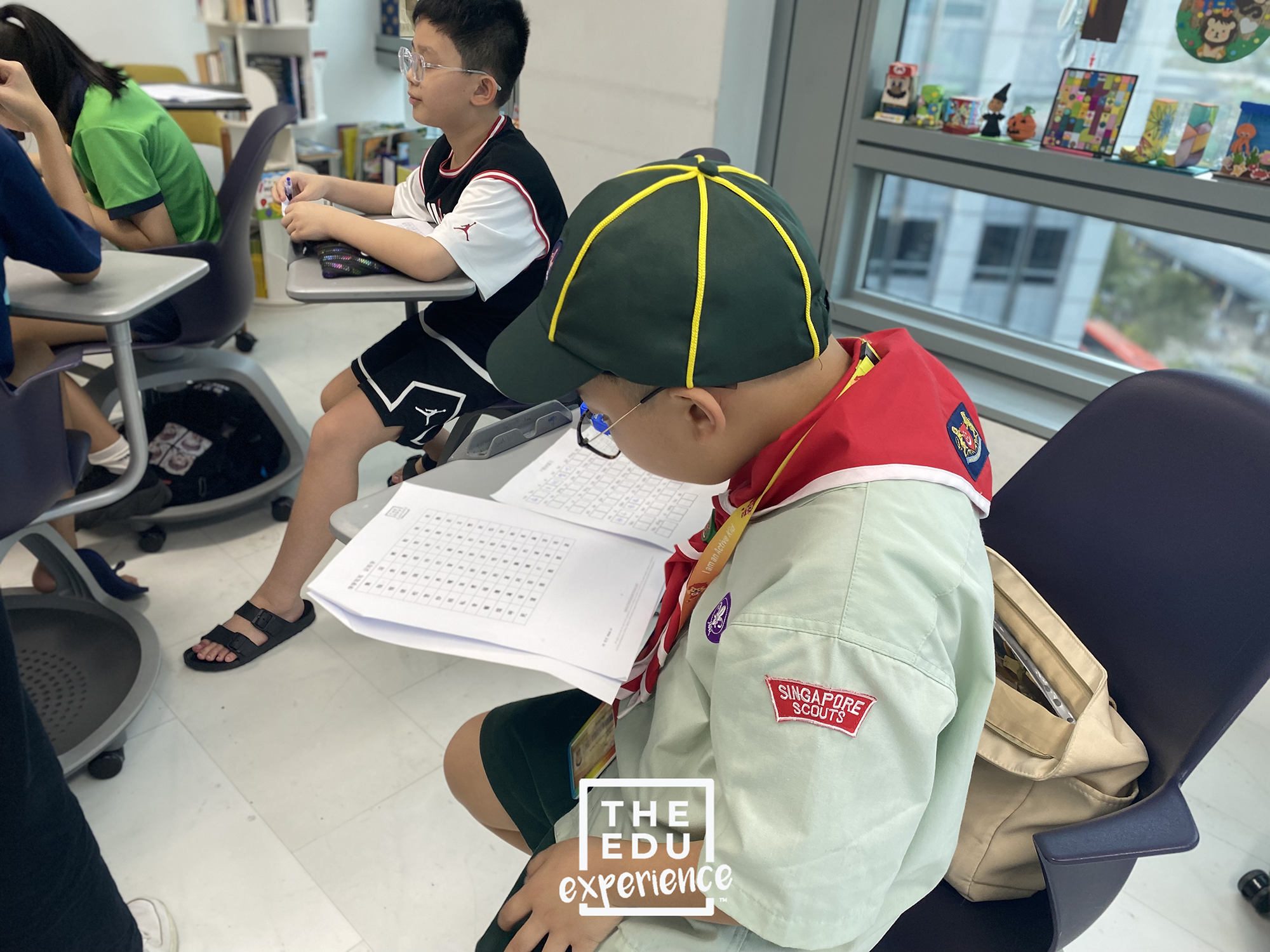
P3-P5 students sit for mock exam papers once a year, while P6 students sit for mock exam papers twice a year in preparation for the PSLE. These full-length papers allow students to refine their time management skills and build the mental stamina necessary to perform under pressure. They also serve as a diagnostic tool to pinpoint specific areas of weakness that require targeted revision before the final exam.
Common Chinese Hurdles Students May Face
Pinyin and Polyphonic Character Difficulties
Writing Accuracy
Reading Comprehension Challenges
Sentence Structure Issues
Difficulty in Independent Writing
Why Parents Choose TEE for Primary Chinese Tuition
We don’t just drill for exams; we build scholars who love the language.
1. The “Writing-First” Advantage (Unique 1:2 Ratio)
Most centres offer a generic 2-hour class that rushes through everything. We treat writing with the seriousness it deserves. Our unique weekly structure—1 Core Lesson + 2 Thematic Writing Lessons—ensures your child gets triple the exposure to the language compared to standard tuition centres. We turn your child’s weakest subject into their strongest asset.
2. Taught by Native Speakers (Cultural Immersion)
Language cannot be mastered without understanding its roots. Our lessons are led by native speakers who bring Chinese alive beyond the textbook. We integrate literature, history, traditional poems, and idioms into our lessons. This fosters a genuine interest in the culture, making students want to learn, rather than just forcing them to memorise characters.
3. Proprietary Writing Frameworks
We don’t just tell students to “write more.” We give them scientific formulas to structure their thoughts.
- For Picture Compositions: Our 5-Step “Look-Think-Speak-Write-Evaluate” method prevents students from getting stuck or missing out on important details.
- For Topical Compositions: Our 3-Method analysis (Keywords, Implicits, Scope) ensures students never go off-topic, a common cause of scoring low marks in the PSLE.
4. Focus on “Reflection” & Critical Thinking
Scoring AL1 in Chinese requires more than just good grammar; it requires maturity. Unlike others who focus only on narration, we train students how to write strong reflections. We teach them how to extract values and life lessons from their stories, adding the depth and maturity that PSLE examiners look for in top-tier compositions.
Locate Our Centre For Chinese
Tampines Centre
3 Tampines Central 1, #07-02, Tampines Plaza 1, Singapore 529540