

At The Edu Experience, our primary Math programme is designed to build strong conceptual understanding and confident problem-solving skills. Through clear explanations, structured practice, and expert guidance, we help students think logically, apply strategies effectively, and approach Math with confidence–supported by our unlimited tuition model.
What is Unlimited Tuition?
Unlike typical tuition centres, TEE students can attend up to four classes a week at no extra cost, allowing for regular practice, immediate clarification of doubts, and repeated exposure to key concepts. Unlimited tuition at TEE gives students the flexibility to learn without being restricted by once-a-week lessons. This consistent support helps learning deepen over time, builds confidence, and ensures students progress at a pace that truly suits their needs.
Why Unlimited Tuition?
Children learn best through repetition, practice, and the freedom to try again. Unlimited tuition supports learning in the same way. Just like learning to ride a bike or feed themselves, children do not master new skills immediately; they wobble, make mistakes, and improve with each attempt.
TEE’s unlimited Math programme is built on the understanding that mastery in Mathematics takes time, practice, and guided repetition. Mathematical concepts often require students to revisit methods, practise different question types, and make mistakes before true understanding takes place.
How Does Unlimited Math Tuition Benefit Students?
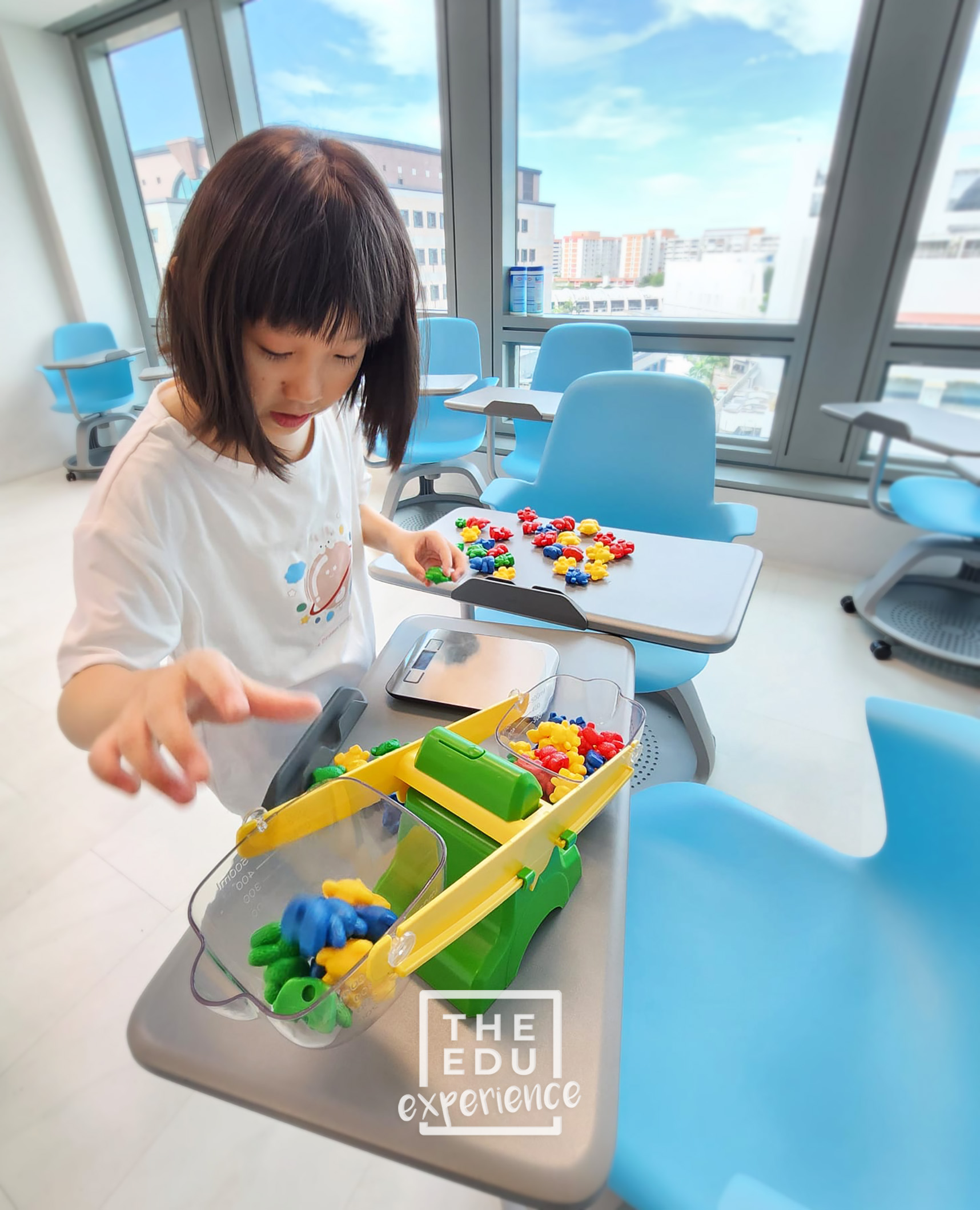
With unlimited access to lessons, students are free to reinforce foundational skills, clarify doubts, and apply strategies repeatedly until they become second nature.
Our approach allows teachers to address gaps early, reteach concepts in different ways, and stretch students further when they are ready. Without the pressure of limited lessons, students gain confidence to ask questions, practise more, and develop strong problem-solving habits, ensuring that learning in Math is deep and long-lasting.
How Does It Work?
STEP 01
Reserve a Fixed Weekly Class
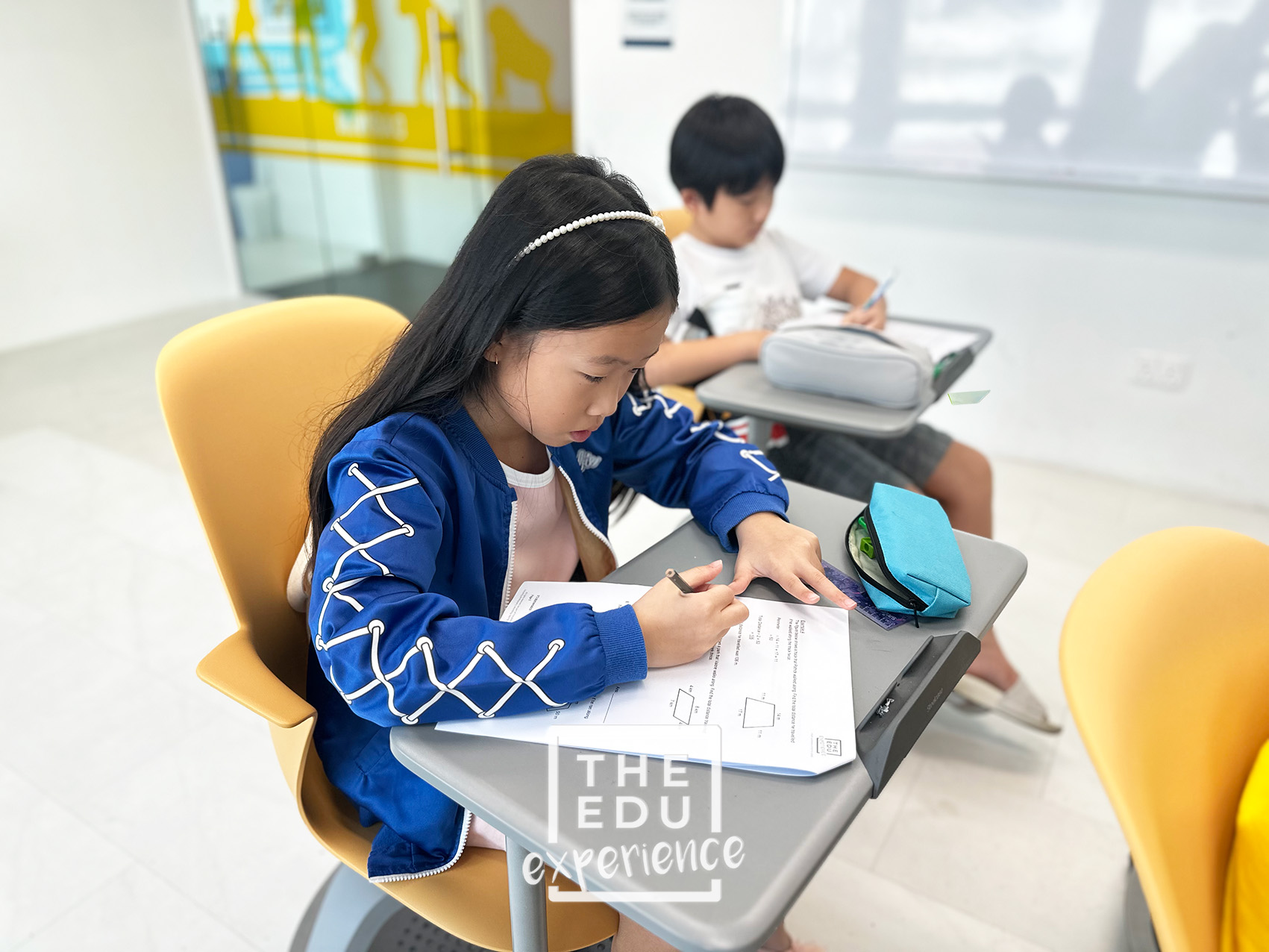
Reserve 1 fixed, weekly Primary Math tuition class.
STEP 02
Book Extra Classes
Struggling with a specific topic like Ratio or Fractions?
Book extra tuition classes during the week to reinforce these concepts at no extra cost.
STEP 03
Get Extra Support
Need extra support?
Book a consultation slot* (conducted on Tuesdays), and receive 1-on-1 guidance with a dedicated Math teacher.
We know that life is busy. That’s why we built our own app that allows you to manage bookings easily.
*Consultations are only available at our Tampines location.
Master Primary School Math with Our ACE Approach
The Edu Experience’s unique ACE approach divides the Mathematics syllabus into 3 major milestones that Primary students reach. This structured roadmap ensures your child builds the right skills at the right stage.
A
P1 & P2
Accelerate Arithmetic
C
P3 & P4
Conquer Challenges
E
P5 & P6
Excel in Examinations
Primary Math 1-2: Accelerate Arithmetic
The Goal: Transitioning seamlessly to primary school and building an interest in the subject.
Primary 1 can be stressful for children as they transition from kindergarten. We make this transition pain-free using fun and engaging methods to help students learn leisurely and develop a genuine interest in Mathematics. We help students:
Build their Foundation: Parents often have a misconception that lower primary Math is easy, leading them to trivialise it. However, a weak foundation here will lead to struggles with higher-order problem sums later.
Master the Essentials: Our curriculum centres around understanding the essentials of arithmetic—addition, subtraction, multiplication, and division. Through real-life application, interactive activities, and challenging questions, students learn the rules of numbers so they can calculate accurately and quickly.
Primary Math 3-4: Conquer Challenges
The Goal: Mastering Heuristics and complex problem-solving.
At this stage, the difficulty of schoolwork increases exponentially. Many students struggle to fully grasp concepts in school as they face complex word problems for the first time. Our programme:
Introduces Heuristics: We introduce Heuristics strategies to our P3 and P4 students. They pick up the specific techniques needed to analyse and solve these complex word problems.
Helps Students Clarify Their Doubts: Our programme helps students clarify their doubts and work on their weaknesses immediately. Through engaging workshops and consistent practice, we hone their critical thinking and analytical skills, giving them the confidence to do well in school.
Primary Math 5-6: Excel in Examinations
The Goal: Getting ready for the PSLE and picking up exam strategies.
As students progress to Primary 5 and 6, the focus shifts to efficiency and precision. We empower students with our easy-to-recall, step-by-step EDU Method:
E Establish keywords
D Determine question requirements
U Use the correct method
Developing Exam Readiness Through Mock Exam Papers
Sitting for mock exam papers helps students:
1
Familiarise themselves with the exam format
Familiarise themselves with the exam format
2
Identify their areas of weakness
Identify their areas of weakness
3
Learn proper time management
Learn proper time management
4
Pick up examination strategies
Pick up examination strategies
5
Build their examination stamina
Build their examination stamina
P5 students sit for full mock exam papers twice a year, while P6 students sit for them thrice a year. Mock exam papers allow our teachers to identify the specific areas that students are struggling with and provide in-depth feedback. This enables students to receive help for topics that they are weak in. In addition, our mock papers are timed. This trains our students to manage their time effectively during the examination. They learn to allocate the proper amount of time to each question based on mark allocation and difficulty. Students also pick up different examination strategies, such as tackling multiple-choice questions, showing workings clearly, and managing emotions that may arise during the paper.

Math Challenges Students May Face
Complex Word Problems (Problem Sums)
Word problems are challenging as they require not only mathematical skills but also strong language and reasoning abilities. Students often find it difficult to identify keywords in the questions that point to the way the questions can be solved. Many problems involve multiple steps, and children may struggle to plan their approach or make mistakes while transitioning between steps. At higher levels, students are expected to apply a range of problem-solving heuristics beyond basic model-drawing.
📉
Gaps in Abstract Understanding
As students advance, Mathematics shifts from concrete concepts to more abstract ideas. Topics such as fractions, decimals, and percentages can be difficult to visualise, especially for students who are used to working with whole numbers. Mathematics builds on prior knowledge in a cumulative manner. Weak foundations in earlier topics such as Multiplication or Fractions may lead to difficulties with more advanced concepts like Ratio, Algebra or Rates in upper primary.
⏱️
Time Pressure During Examinations
Assessment conditions introduce additional challenges beyond content mastery. Some students struggle with time management and may spend too long on challenging questions, resulting in incomplete papers. Careless mistakes are common, including misreading numbers, not converting values to the correct units, or making small calculation errors that affect multi-step solutions.
From Primary 5 onwards, students are required to use calculators for Paper 2. Difficulties in using the calculator efficiently, or a decline in mental calculation skills needed for Paper 1, can lead to the unnecessary loss of marks.
🧠
Mental Barriers
A child’s mindset and learning environment play an important role in their performance. A significant increase in the difficulty of questions, particularly in Primary 3 and Primary 5, can affect students’ confidence. Children who previously performed well may feel overwhelmed. Rising curriculum demands can lead to psychological avoidance, where students perceive complex problems as insurmountable. However, these challenges are often manageable if approached with a structured, step-by-step analytical framework.
Complex Word Problems (Problem Sums)
Word problems are challenging as they require not only mathematical skills but also strong language and reasoning abilities. Students often find it difficult to identify keywords in the questions that point to the way the questions can be solved. Many problems involve multiple steps, and children may struggle to plan their approach or make mistakes while transitioning between steps. At higher levels, students are expected to apply a range of problem-solving heuristics beyond basic model-drawing.
⏱️
Time Pressure During Examinations
Assessment conditions introduce additional challenges beyond content mastery. Some students struggle with time management and may spend too long on challenging questions, resulting in incomplete papers. Careless mistakes are common, including misreading numbers, not converting values to the correct units, or making small calculation errors that affect multi-step solutions.
From Primary 5 onwards, students are required to use calculators for Paper 2. Difficulties in using the calculator efficiently, or a decline in mental calculation skills needed for Paper 1, can lead to the unnecessary loss of marks.
📉
Gaps in Abstract Understanding
As students advance, Mathematics shifts from concrete concepts to more abstract ideas. Topics such as fractions, decimals, and percentages can be difficult to visualise, especially for students who are used to working with whole numbers. Mathematics builds on prior knowledge in a cumulative manner. Weak foundations in earlier topics such as Multiplication or Fractions may lead to difficulties with more advanced concepts like Ratio, Algebra or Rates in upper primary.
🧠
Mental Barriers
A child’s mindset and learning environment play an important role in their performance. A significant increase in the difficulty of questions, particularly in Primary 3 and Primary 5, can affect students’ confidence. Children who previously performed well may feel overwhelmed. Rising curriculum demands can lead to psychological avoidance, where students perceive complex problems as insurmountable. However, these challenges are often manageable if approached with a structured, step-by-step analytical framework.
Locate Our Centres For Math
Tampines Centre
3 Tampines Central 1, #07-02, Tampines Plaza 1, Singapore 529540
Bukit Timah Centre
9 King Albert Park, #02-25/26 KAP Mall, Singapore 598332